
Healthcare Leaders Call for a Nationwide Patient Charter
Healthcare Leaders Call for National Patient Charter
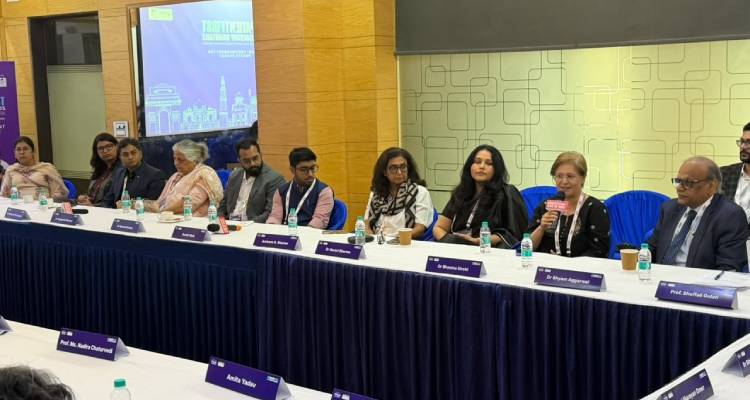
Gaps in patient representation, access to high-cost therapies and disability-inclusive healthcare emerged as key concerns at a National Leadership Roundtable on Patient Centricity convened by the Integrated Health and Wellbeing (IHW) Council in partnership with the Indian Medical Parliamentarians Forum (IMPF).
The roundtable brought together clinicians, policy experts, patient advocacy groups and pharmaceutical industry representatives to discuss strengthening patient participation in healthcare policymaking and improving access to care.
Kamal Narayan, CEO, IHW Council, said healthcare systems must be designed around patients, with their needs considered across planning, regulation, delivery and access.
“A strong patient-first approach can make healthcare more efficient, effective, accessible and affordable for everyone,” he said.
Improving Access to Advanced Therapies
Access to high-cost and targeted therapies emerged as a major concern. Patient advocates representing lung cancer, thalassemia, spinal muscular atrophy (SMA) and amyotrophic lateral sclerosis (ALS) called for faster access to advanced treatments and greater coverage under government health schemes, including Ayushman Bharat and CGHS.
Dr Vivek Tomar, Cancer Patient Advocate and Co-Founder, ALK Positive India, said cancer treatment should not depend on a patient’s location or financial circumstances.
He called for timely access to appropriate therapies, affordable medicines and clinical trials, while emphasising the need to give patients and caregivers a meaningful role in policymaking.
Bringing Patient Voices Into Policy
Dr Shivaji Kalge, Member of Parliament (Lok Sabha) from Latur and member of the IMPF, who attended the roundtable as chief guest, highlighted the importance of incorporating the concerns of patients, caregivers and healthcare professionals into health policies and programmes.
He said policymakers must ensure that ground-level challenges are reflected in government decisions and that patient-friendly policies remain central to healthcare planning.
He also highlighted the role of the Indian Medical Parliamentarians Forum in bringing patient and healthcare-sector concerns to policymakers.
Focus on Early Detection and Family Support
Participants pointed to gaps earlier in the care journey, including limited access to newborn screening outside private urban hospitals. They stressed the importance of early identification and intervention, alongside greater recognition of the role played by caregivers and families in long-term care.
The discussions were structured around five areas of the IHW Council’s 10X Principle of Patient First Care: Availability, Accessibility, Innovation, Quality of Care and Shared Decision Making. Participants called for these principles to be integrated more consistently into healthcare policies, programmes and services.
Prevention Remains a Key Priority
The roundtable also examined India’s growing disease burden. Oncologists cited an estimated 1.5 million to 1.6 million new cancer cases annually in the country, with the burden projected to double over the next two decades.
Tobacco use, obesity and pollution were identified among the major preventable risk factors, underscoring the need to strengthen prevention alongside diagnosis, treatment and follow-up care.
Dr Avinash, DADG, NCD & Patient Safety Division, Directorate General of Health Services, Ministry of Health and Family Welfare, highlighted the importance of prevention and health promotion. He noted that more than 27 national health programmes under the National Health Mission address these areas.
The meeting also discussed government efforts to expand cancer screening and treatment infrastructure, including the development of district cancer care centres.
Addressing Neurodevelopmental Disorders
The needs of children and families affected by neurodevelopmental disorders were also highlighted.
Dr Shafali Gulati, Child Neurology and Neurodevelopment, said conditions such as autism and other neurological disorders require greater recognition as public health priorities.
She emphasised the importance of timely identification, early intervention and continued support throughout the lifespan, adding that healthcare systems must address not only diagnosis and treatment but also the long-term needs of families and caregivers.
Call for a National Patient Charter
Participants called for the development of a National Patient Charter incorporating disease-specific patient perspectives and establishing a framework for meaningful patient representation in healthcare policymaking.
Key recommendations included harmonising government health insurance schemes to improve coverage for costly therapies, accelerating clinical trial access for Indian patients, expanding patient navigator programmes, increasing newborn and rare disease screening, and strengthening safety scrutiny for generic versions of high-cost biologics.
Participants also called for a formal charter developed with inputs from patient advocacy organisations to give patient perspectives a stronger role in shaping health policy.
The roundtable forms part of a series of discussions ahead of the 6th Patient First Summit 2026, scheduled for October 23 in Mumbai under the theme “Redefining Healthcare: Where Every Patient Matters.” The summit is expected to address patient representation, access to care and participation in healthcare decision-making.