

VIRTOSHA: Training In Surgery Using VR Technology
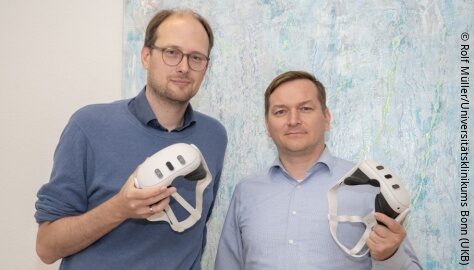
A research team from Bonn University Hospital, Cologne University of Applied Sciences and other partners is working on the VIRTOSHA project, which is developing a virtual reality training environment for surgical procedures.
This project combines tissue simulation, an authoring system for creating individual learning content and haptic feedback arms to increase the realism of surgical training.
The training of surgeons is a lengthy and complex process, especially for demanding procedures such as bone surgery. To improve the efficiency of this training, the VIRTOSHA project aims to develop a VR environment in which trainee surgeons can train operations in a realistic, risk-free environment. This modern technology provides a platform on which surgical situations with virtual patients can be simulated, which significantly enriches the learning environment.
Key features of the VIRTOSHA project
The VIRTOSHA project combines several advanced features to create a comprehensive training tool:
- Haptic feedback: the system integrates haptic arms that provide realistic feedback and allow trainees to feel the resistance and texture of tissues during surgical tasks.
- Customizable scenarios: The authoring system built into the VR system allows surgeons to create and update training scenarios, covering a variety of cases and surgical techniques. This flexibility is crucial to adapt the training to different patient needs and surgical innovations.
- Realistic tissue simulation: The simulation system developed by the team at TH Köln realistically replicates human soft tissue such as bone, periosteum and muscle tissue. This feature ensures that surgical training accurately reflects real-life conditions.
Simulation of diverse patient scenarios
A key aspect of the VIRTOSHA project is the ability to simulate different patient scenarios. By analyzing real operations, the team can simulate the behavior of tissues, implants and surgical tools as well as the haptic feedback that can be felt via fingers or hands.
We use software to design different scenarios where tissue and bone properties can be adjusted to simulate different patients. A realistic representation of the tissues and bones as well as the precise integration of hand movements are crucial for the real feeling in the VR environment,” explains Prof. Björn Krüger from the University Hospital Bonn. This adaptability is crucial to ensure that the training tool meets the diverse requirements of surgical training.
#University Hospital Bonn #GenZGrowth #Pasticsnews #ModernPlasticsIndiaMagazine
#PrintPublication #PrintMagazine #Modernhealthcareindia