


Smart Pills With AI: Advancing Gastrointestinal Health Monitoring
Researchers at the USC Viterbi School of Engineering have developed advanced ingestible sensors that utilize AI and wearable electronics to provide real-time 3D monitoring of gastrointestinal health. These innovative smart pills can detect stomach gases and track their location within the body, offering potential for early disease detection.
Tracking ingestible devices within the body has been a challenge. Innovations in wearable electronics and AI have led to the development of smart pills by the Khan Lab, capable of real-time location tracking. Assistant Professor Yasser Khan and his team have designed capsules that identify gases linked to gastritis and gastric cancers, using a wearable system to monitor these smart pills accurately. The research, published in Cell Reports Physical Science, represents a significant advancement in ingestible technology.
Innovations in materials and technology
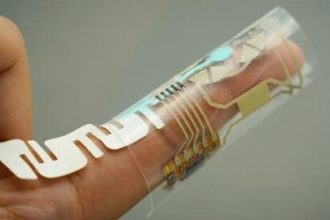
While wearable sensors hold promise for tracking body functions, tracking ingestible devices has been limited. Khan’s team, in collaboration with the USC Institute for Technology and Medical Systems Innovation (ITEMS) at the Michelson Center for Convergent Biosciences, has developed a wearable coil that generates a magnetic field on a t-shirt. This field, combined with a trained neural network, allows the team to locate the capsule within the gastrointestinal (GI) tract. Ansa Abdigazy, lead author and PhD student in the Khan Lab, noted that this level of tracking has not been demonstrated with wearables before.
Sensing material for gas detection
The second innovation is the creation of a sensing material. The capsules are equipped with an optical sensing membrane that selectively detects gases. This membrane, made from materials that react to ammonia gas, identifies ammonia levels—a component of H. pylori gut bacteria. Elevated levels of ammonia can signal conditions such as peptic ulcers, gastric cancer, or irritable bowel syndrome. Khan explains, “The presence of this gas can be used as an early disease detection mechanism.”
The USC team has tested this ingestible device in various environments, including liquid simulations and bovine intestines. “The ingestible system with the wearable coil is both compact and practical, offering a clear path for application in human health,” said Khan. The device is currently patent pending, with plans to test it in swine models as the next step.
Potential for broader applications
Beyond gastrointestinal applications, there is potential for monitoring brain health due to the brain-gut axis. Neurotransmitters in the gut are correlated with neurodegenerative diseases. Khan’s ultimate research goal is to develop non-invasive methods to detect neurotransmitters related to conditions like Parkinson’s and Alzheimer’s.
The development of smart pills by USC Viterbi researchers marks a significant step forward in gastrointestinal health monitoring. These AI-driven, wearable-enabled ingestible sensors offer precise tracking and early disease detection, with potential applications extending to brain health. The ongoing research and upcoming tests will further validate the effectiveness of this technology in medical diagnostics.
#USC #GenZGrowth #Pasticsnews #ModernPlasticsIndiaMagazine
#PrintPublication #PrintMagazine #Modernhealthcareindia