



India Tightens Medical Device Safety Monitoring as Hospitals Asked to Report Adverse Events
New Delhi, September 22, 2026: Hospitals across India have been asked to strengthen their systems for identifying, documenting and reporting adverse events associated with medical devices, as the country moves toward a more structured approach to medical device safety surveillance.
The updated framework has been issued under the Materiovigilance Programme of India (MvPI) by the Indian Pharmacopoeia Commission (IPC) in collaboration with WHO India and other national stakeholders. The guidance document, titled Guidance Document for Hospitals in India for Safety Monitoring and Reporting of Medical Device-Related Incidents/Adverse Events, Version 1.3, is designed to improve the early detection and management of risks linked to medical devices.
Focus on Early Detection of Medical Device Risks
The updated guidance covers a wide range of incidents, including device malfunction or deterioration, incorrect or out-of-specification test results, design deficiencies, labelling problems, use errors, near-miss incidents and other events that could potentially affect patient safety.
Importantly, hospitals have been advised to report suspected medical device adverse events even when a definitive causal relationship between the device and the incident has not yet been established.
The approach is intended to allow safety authorities to identify potential signals at an early stage, investigate them and, where necessary, recommend corrective or preventive measures.
New Reporting Timelines for Hospitals
The guidance establishes specific timelines for reporting different categories of events.
Serious adverse events involving death or serious deterioration in a patient’s health are to be reported to the Materiovigilance Programme of India within 15 days. Non-serious events that could potentially result in serious harm are to be reported within 30 days.
Suspected unexpected serious adverse events are also required to be reported to the relevant licensing authority within 15 days.
Hospitals have additionally been advised that when there is uncertainty about whether an incident qualifies for reporting, the preferred approach should be to report it rather than overlook a potentially important safety signal.
Greater Monitoring of Critical Medical Devices
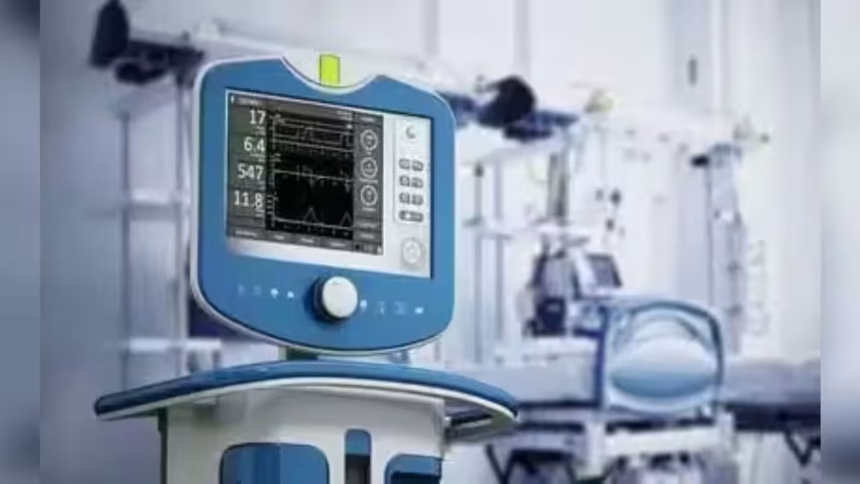
The framework places particular emphasis on critical and life-saving devices used in high-risk healthcare environments.
These include equipment used in:
- Intensive care units
- Cardiology
- Neurosurgery
- Oncology
- Emergency care
- Operation theatres
- Catheterisation laboratories
Hospitals are expected to establish active surveillance systems for critical devices based on their usage and risk profiles. Designated personnel may be assigned to monitor these devices, sensitise healthcare workers about potential problems and ensure that incidents and near misses are reported promptly.
This could cover situations such as an insulin pump delivering an incorrect dose, an infusion pump malfunctioning, a pulse oximeter providing inaccurate readings or a defibrillator failing to operate as expected.
Hospitals Asked to Strengthen Documentation
The guidance also calls for more comprehensive documentation of device-related incidents.
Hospitals are expected to maintain records covering adverse events, preventive maintenance, calibration and investigations. Significant or recurring incidents should undergo structured root-cause analysis, followed by corrective and preventive action where required.
Healthcare facilities have also been encouraged to designate a nodal officer or establish a Medical Device Adverse Event Monitoring Centre where applicable.
Regular training of clinical, nursing and biomedical engineering personnel is another component of the framework.
Nationwide MvPI Network Expands
The Materiovigilance Programme of India was launched in 2015 to systematically monitor the safety of medical devices used in the country.
According to the updated guidance, the programme had established 775 Medical Device Adverse Event Monitoring Centres across India as of September 2026. The Indian Pharmacopoeia Commission functions as the programme’s National Coordination Centre and analyses reported events to identify emerging safety signals.
The system is particularly important as India’s healthcare sector increasingly adopts sophisticated technologies, including connected medical devices, implantable equipment, in-vitro diagnostic devices, artificial-intelligence-enabled technologies and software used as medical devices.
These technologies can introduce new forms of risk, making continuous post-market monitoring increasingly important.
Digital Reporting for Medical Device Incidents
Medical device adverse events can be reported through the IPC’s Adverse Drug Reactions Monitoring System (ADRMS) and other reporting mechanisms.
The IPC has also made dedicated medical-device reporting forms available for healthcare professionals, licence holders and consumers. Its official resources include forms for medical device adverse events, field safety corrective actions and in-vitro diagnostic devices.
The IPC has separately published guidance explaining how stakeholders can use ADRMS for medical-device adverse-event reporting.
Strengthening Patient Safety
The latest guidance comes during India’s 6th National Pharmacovigilance Week, being observed from September 17 to 23, 2026, under the theme “Promoting Rational Use of Medicines through Pharmacovigilance: A Step Towards Safer Healthcare.”
The Union Health Ministry and IPC have been using the programme to expand awareness around medicine safety, adverse-event reporting and patient protection. The government has also launched the 7th Edition of the National Formulary of India and the ADR-PvPI 2.0 mobile application as part of broader pharmacovigilance efforts.
For India’s hospitals, the strengthened medical-device surveillance framework represents a shift toward more systematic post-market monitoring, where malfunctions, near misses and unexpected outcomes can be captured earlier and used to improve patient safety.