


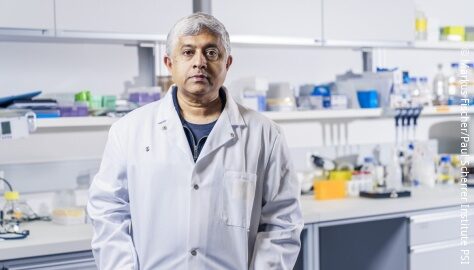
AI For The Precise Characterization Of Breast Cancer Stages
A new study by the Paul Scherrer Institute (PSI) and the Massachusetts Institute of Technology (MIT) shows how artificial intelligence (AI) can improve the categorisation of breast cancer stages.
The researchers used AI to determine the disease stage of breast cancers such as ductal carcinoma in situ (DCIS) more precisely and cost-effectively. This study has great potential for future clinical application, but is not yet ready for widespread use.
Not every breast cancer is the same. Some tumours grow slowly and remain harmless, while others develop aggressively into invasive breast cancer (IDC). DCIS, a preliminary stage of invasive breast cancer, is particularly important in women. DCIS develops into an invasive carcinoma in 30 to 50 per cent of cases. Due to this uncertainty, treatment is often recommended, although not every case is dangerous.
Deciding which DCIS cases require treatment is a major challenge for doctors. Until now, this decision has often been based on so-called grading methods, which are based on the analysis of tissue samples and categorisation into different risk levels. However, these methods are limited in their accuracy and still leave a great deal of uncertainty when it comes to treatment.
Artificial intelligence as a solution
This is where the new study by PSI and MIT comes in. The researchers developed an image analysis that uses AI to more accurately assess the stage of DCIS. The advantage of this approach lies in the use of inexpensive chromatin images which, in combination with powerful algorithms, provide detailed information about the organisation of the DNA in the cells. This information helps to better predict the transition from DCIS to IDC.
The study is based on 560 tissue samples from 122 patients. Using the dye DAPI, which makes the chromatin in the cell nuclei visible, the researchers were able to recognise patterns that are difficult for human pathologists to detect. The AI model showed a high level of agreement with the pathologists‘ results and improved the accuracy of the predictions.
“Our analysis shows that chromatin images, which are cheap and easy to obtain, together with powerful AI algorithms, can provide enough information to study how the cell state and tissue organisation change during the transition from DCIS to IDC, and thereby accurately predict the stage of the disease,” explains Caroline Uhler from MIT.
Prospects for clinical practice
The results of the study show that artificial intelligence in combination with chromatin images could be a promising method for characterizing breast cancer more precisely. It should be emphasised that this technology is inexpensive and relatively easy to implement. It therefore offers the potential to improve the staging of breast cancer even in less specialised clinics and to reduce uncertainty when making treatment decisions.
However, further studies are required before this method can be used in clinical practice. These include long-term observations of DCIS patients as well as tests on the reliability and safety of the approach. Only if these further studies deliver positive results could the method be integrated into medical care across the board.
#PSI #GenZGrowth #Pasticsnews #ModernPlasticsIndiaMagazine
#PrintPublication #PrintMagazine #Modernhealthcareindia