


The Role Of 5G Technology In Hybrid Operating Rooms
The 5G-OR project, an international collaboration between German and French research teams, is exploring how 5G and AI technologies can enhance the safety, efficiency, and cost-effectiveness of surgeries. By developing high-tech hybrid operating rooms, the project paves the way for remote surgeries, improved patient monitoring, and real-time data exchange.
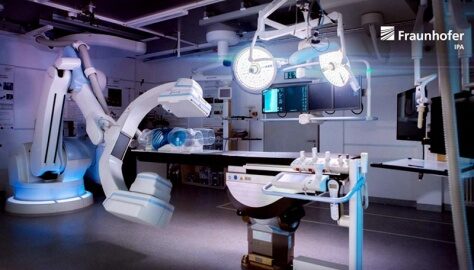
The integration of 5G technology into operating rooms is transforming surgical practices across Europe. At the Fraunhofer Institute for Manufacturing Engineering and Automation IPA in Mannheim, researchers have developed a networked hybrid operating room capable of transferring data in real-time. This technology promises to not only enhance operational efficiency but also improve patient safety and reduce medical errors.
The 5G-OR project, which involved a collaboration between German and French teams, explored the potential of 5G to create new applications for surgery and patient care. “These days, economic pressures mean that hospitals are forced to build efficient new infrastructure and processes while also finding fresh new ways to use technology to connect and share data,” says Johannes Horsch, a project manager working in health technology research at the Fraunhofer Institute for Manufacturing Engineering and Automation IPA at the Mannheim location. “The French-German project 5G-OR, which brings public and industrial research together, addresses both aspects.”
The benefits of 5G in surgery
By enabling high-speed data transmission, 5G offers a host of benefits for the medical field, particularly in surgical settings. The 5G-OR project demonstrated several key applications:
AI-assisted monitoring of vital signs: Patients are equipped with smart patches that track vital signs and send them to a monitoring platform using 5G. AI algorithms analyze this data to detect potential complications early, improving patient outcomes.
AI-supported analysis of surgical data: During surgery, AI analyzes video feeds and data from surgical instruments, identifying potential risks and streamlining workflows.
Robot-assisted telesurgery: With the support of robots, surgeons can perform surgeries remotely. 5G ensures high bandwidth and low-latency connections, which are essential for the transmission of large data volumes in real-time.
Mobile robotic support in the operating room: A mobile robotic platform developed by Reutlingen University and Fraunhofer IPA autonomously transports medical supplies and instruments within the operating room, reducing the logistical burden on hospital staff.
The future of 5G in healthcare
The next step for the 5G-OR project is to bring these technologies into clinical practice. This involves testing, medical reviews, and partnerships with industry players to accelerate market readiness. In the future, the team hopes to expand the network to include more hospitals and strengthen international collaboration.
By facilitating cross-border data exchange and providing a foundation for AI use in surgery, the project is helping to improve patient safety and surgical practices across Europe. As Horsch concludes, “Close collaboration between Germany and France within the project is not just important. It’s vital. Through these efforts, we are enabling the cross-border exchange of data and accelerating international consensus on the use of AI in operating rooms. In this way, 5G-OR is contributing to advances in surgical practice and to improving patient safety in Europe.”
#Fraunhofer#GenZGrowth #Pasticsnews #ModernPlasticsIndiaMagazine
#PrintPublication #PrintMagazine #Modernhealthcareindia