
By using this site, you agree to the Privacy Policy and Terms of Use.
Accept
Modern Healthcare IndiaModern Healthcare IndiaModern Healthcare India
Notification Show More
Font ResizerAa
  • Home
  • News & Perspective
    News & PerspectiveShow More
    TAGMA 2026 to Unveil Advanced Tooling Solutions at Die & Mould India Expo
    By Modernhealthcare
  • Health Conditions
    Health Conditions
    The World Health Organization defines health as “a state of complete physical, mental, and social well-being and not merely the absence of disease or infirmity.”…
    Show More
    Top News
    NR Foundation Reinforces Commitment To Community Healthcare In Mysuru
    February 17, 2026
    Latest News
    NR Foundation Reinforces Commitment To Community Healthcare In Mysuru
    February 17, 2026
  • Nutrition & Fitness
    Nutrition & FitnessShow More
  • Beauty Lab
    Beauty LabShow More
  • Team
  • Contact
Modern Healthcare IndiaModern Healthcare India
Font ResizerAa
  • Food & Diet
  • Beauty Lab
  • Anatomy
  • Health Conditions
  • News & Perspective
  • Nutrition & Fitness
Search
  • Home
  • Digital Health
  • Medical Research
  • Medical Diagnostics
  • Artificial Intelligence in Healthcare
  • Health Conditions
  • Team
  • Contact
Follow US
Artificial Intelligence in Healthcare

AI For The Precise Characterization Of Breast Cancer Stages

Rupali
Last updated: February 7, 2026 5:36 am
By Rupali
Share
4 Min Read
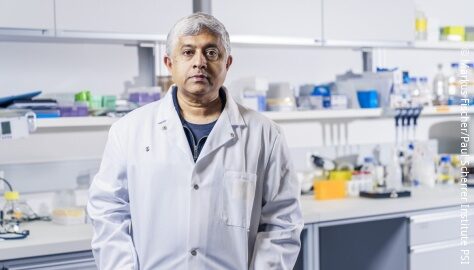
G.V. Shivashankar’s group is currently developing various methods for the diagnosis and prognosis of cancer at PSI. The current study gives hope for a better characterization of a form of breast cancer.
SHARE

AI For The Precise Characterization Of Breast Cancer Stages

A new study by the Paul Scherrer Institute (PSI) and the Massachusetts Institute of Technology (MIT) shows how artificial intelligence (AI) can improve the categorisation of breast cancer stages.

The researchers used AI to determine the disease stage of breast cancers such as ductal carcinoma in situ (DCIS) more precisely and cost-effectively. This study has great potential for future clinical application, but is not yet ready for widespread use.

Not every breast cancer is the same. Some tumours grow slowly and remain harmless, while others develop aggressively into invasive breast cancer (IDC). DCIS, a preliminary stage of invasive breast cancer, is particularly important in women. DCIS develops into an invasive carcinoma in 30 to 50 per cent of cases. Due to this uncertainty, treatment is often recommended, although not every case is dangerous.

Deciding which DCIS cases require treatment is a major challenge for doctors. Until now, this decision has often been based on so-called grading methods, which are based on the analysis of tissue samples and categorisation into different risk levels. However, these methods are limited in their accuracy and still leave a great deal of uncertainty when it comes to treatment.

Artificial intelligence as a solution

This is where the new study by PSI and MIT comes in. The researchers developed an image analysis that uses AI to more accurately assess the stage of DCIS. The advantage of this approach lies in the use of inexpensive chromatin images which, in combination with powerful algorithms, provide detailed information about the organisation of the DNA in the cells. This information helps to better predict the transition from DCIS to IDC.

The study is based on 560 tissue samples from 122 patients. Using the dye DAPI, which makes the chromatin in the cell nuclei visible, the researchers were able to recognise patterns that are difficult for human pathologists to detect. The AI model showed a high level of agreement with the pathologists‘ results and improved the accuracy of the predictions.

“Our analysis shows that chromatin images, which are cheap and easy to obtain, together with powerful AI algorithms, can provide enough information to study how the cell state and tissue organisation change during the transition from DCIS to IDC, and thereby accurately predict the stage of the disease,” explains Caroline Uhler from MIT.

Prospects for clinical practice

The results of the study show that artificial intelligence in combination with chromatin images could be a promising method for characterizing breast cancer more precisely. It should be emphasised that this technology is inexpensive and relatively easy to implement. It therefore offers the potential to improve the staging of breast cancer even in less specialised clinics and to reduce uncertainty when making treatment decisions.

However, further studies are required before this method can be used in clinical practice. These include long-term observations of DCIS patients as well as tests on the reliability and safety of the approach. Only if these further studies deliver positive results could the method be integrated into medical care across the board.

www.psi.ch/en

#PSI  #GenZGrowth #Pasticsnews #ModernPlasticsIndiaMagazine
#PrintPublication #PrintMagazine #Modernhealthcareindia

Share This Article
Facebook Copy Link Print

World Health Expo 2026 Reinforces Dubai’s Role As Global Hub For Healthcare Collaboration & Innovation
Wolters Kluwer Survey Finds Broad Presence Of Unsanctioned AI Tools In Hospitals And Health Systems
Unitedhealth Posts Modest Earnings Beat, Soft Revenue Guidance As Insurer Plots Turnaround

You Might Also Like

Artificial Intelligence in Healthcare

AI-Based Mapping Of The Brain’s Choroid Plexus

By Rupali
Linkedin Facebook Youtube Instagram X-twitter Telegram
MODERN BUSINESS GLOBAL NETWORK

Modern Business India
Modern Business Asia
Modern Business Europe
Modern Business America
Modern Business Gulf

Load More

MODERN PLASTICS GLOBAL NETWORK

Modern Plastics India
Modern Plastics Asia
Modern Plastics Europe
Modern Plastics America
Modern Plastics Global

Load More

WOMEN INDIA NETWORK

Women India Network
Women India
Beauty N Fitness India
Beauty N Fitness Times
Modern Fashion Life Style

Load More

All Rights Reserved,  © 2000 – 2026. Modern Healthcare India and its related marks are registered trademarks of Chrysolite Media Network Pvt. Ltd., Mumbai (IN).

Powered by
...
►
Necessary cookies enable essential site features like secure log-ins and consent preference adjustments. They do not store personal data.
None
►
Functional cookies support features like content sharing on social media, collecting feedback, and enabling third-party tools.
None
►
Analytical cookies track visitor interactions, providing insights on metrics like visitor count, bounce rate, and traffic sources.
None
►
Advertisement cookies deliver personalized ads based on your previous visits and analyze the effectiveness of ad campaigns.
None
►
Unclassified cookies are cookies that we are in the process of classifying, together with the providers of individual cookies.
None
Powered by
Welcome Back!

Sign in to your account

Username or Email Address
Password

Lost your password?